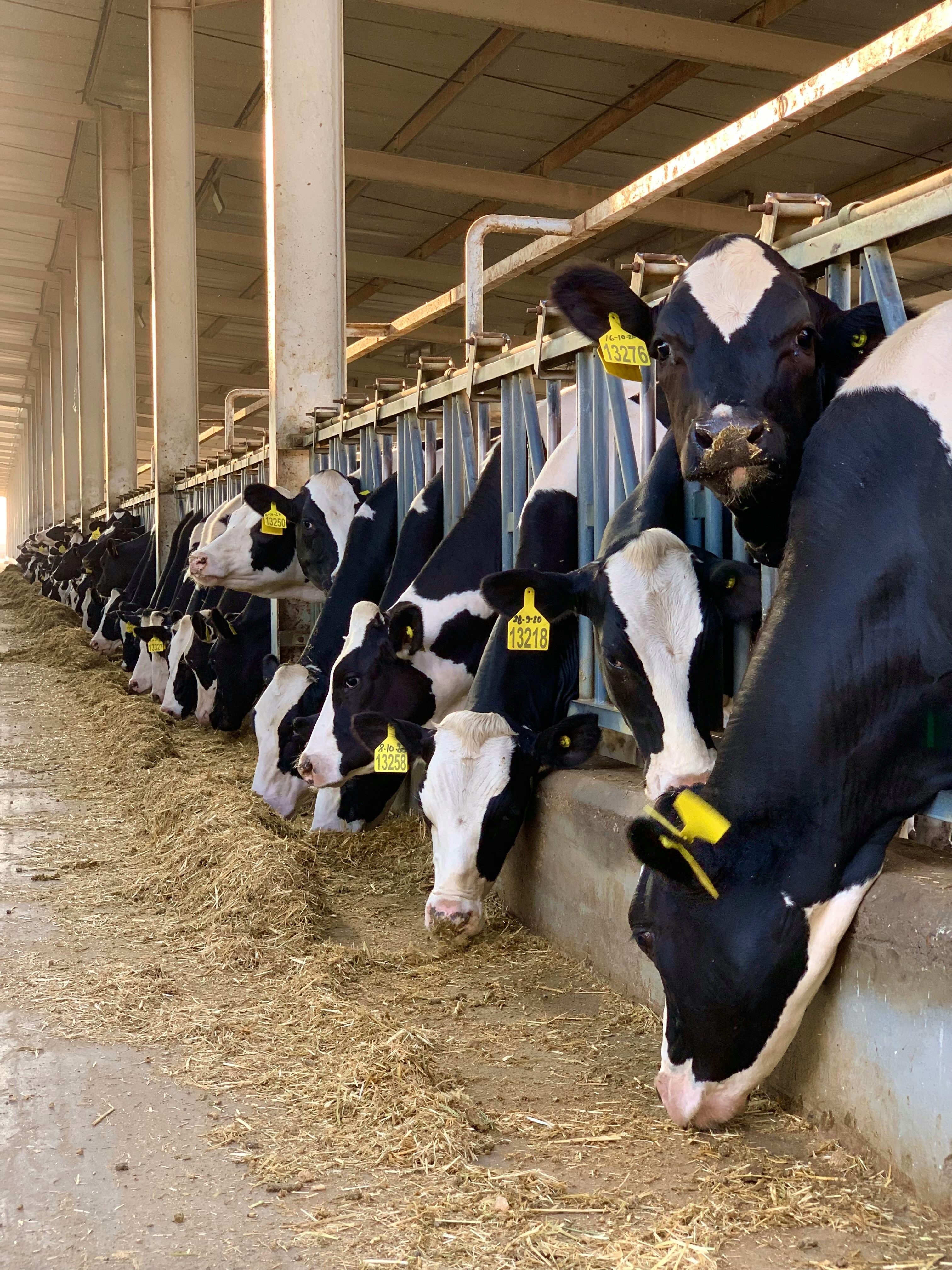
From paddock to payslip: automating award compliance for livestock operations
Livestock payroll has always been complex. But since 1 January 2025, that complexity carries a new weight. Intentional underpayment of wages is now a criminal offence in Australia, with penalties for companies reaching up to $8.25 million - or three times the underpayment amount - and up to ten years' imprisonment for individuals found liable. For operations managing blended rates, piece work, multi-site rosters and seasonal surges, "we calculated it manually" is no longer a defenceworth relying on.
The Fair Work Ombudsman recovered $358 million for more than 249,000 underpaid workers in 2024-25 alone. Agriculture is firmly in its sights. A Goulburn Valley fruit grower signed an enforceable undertaking after making unlawful wage deductions of nearly $127,000 from 112 employees. The sector has changed. The question for livestock operators is whether their payroll systems have changed with it.
The unique Award complexity problem
The challenge isn't that livestock operators don't care about compliance. It's that the awards governing this sector are structurally complex, and manual processes weren't built to handle that complexity at scale.
Take the Meat Industry Award (MA000059). It covers eight distinct classification levels, each with its own base rate, and penalty rate multipliers that stack depending on shift type and employment category. An afternoon shift attracts a 15% penalty loading. Fixed night shifts attract 30%. Non-successive shifts escalate to a total rate of 150% for the first three hours, then 200% after that. Now add 25% casual loading on top. A casual worker on an afternoon shift is paid at 140% of their minimum rate - and that's before overtime, allowances or public holiday variations enter the picture.
As one compliance specialist summarised: "Despite being able to review the award on the Fair Work website, it isn't easy to understand. It resembles closer to a cryptic legislative document than an easy-to-read guide."
Pastoral operations add another layer. Under the Pastoral Award (MA000035), shearers, crutchers and woolpressers are paid under piecework structures (per-head, per-fleece) with rates that must be set before work begins, regularly reviewed, and demonstrably calculated.
In February 2026, the Fair Work Commission described the existing pieceworker provisions as "not fit for purpose" and ruled that piece-rate workers must now be guaranteed a minimum wage floor. Piecework arrangements remain lawful, but the compliance requirements around them have tightened significantly.
Why "we've managed until now" is no longer enough
Most livestock operators haven't made headlines for underpayment, which is precisely the risk. The FWO's recent enforcement record shows that compliance failures don't require malicious intent. Griffith University's $8.34 million back-payment obligation didn't arise from deliberate wage theft. It arose from inadequate systems and a lack of automation. The FWO described it as "a warning of the significant long-running problems that can result from an employer failing to have appropriate checks and balances to ensure workplace compliance."
That warning translates directly to livestock operations managing complex awards, piece-rate structures, and seasonal workforce surges under low-connectivity conditions. The compliance gap goes beyond a question of intent. It's about whether your systems are capable of keeping pace with the obligations. From 1 January 2025, the scope of criminal liability now includes penalty rates, loadings, overtime, allowances, leave payments and superannuation contributions. In a sector where penalty rate multipliers shift by the hour and casual loadings stack with shift classifications, the margin for manual error is significant.
The broader numbers reinforce this. In 2025, only around 35% of Australian organisations reported that their payroll was accurate every pay cycle, and fewer than half expressed strong confidence in their compliance capabilities. Livestock operations - with their multi-award environments, seasonal surges and remote sites - face steeper odds than most.
What automation solves that spreadsheets can't
A purpose-built award engine approaches compliance differently. Rather than relying on payroll teams to manually apply the correct rate for each shift, classification and employment type, an automated system applies the rules at the point of time capture, before errors have a chance to compound.
For the Meat Industry Award, that means the system recognises shift type automatically, applies the correct multiplier, layers casual loading where applicable and flags anomalies before the pay run is processed. For piece-rate structures under the Pastoral Award, it calculates the applicable minimum wage floor and cross-checks it against the piecework rate for that engagement. For multi-award environments spanning kill floors and food manufacturing, it applies the correct award by employee classification — without requiring payroll teams to manually adjudicate each case.
For livestock operations specifically, offline-first time capture is non-negotiable. Kill floors, rendering plants, chillers, remote stations and feedlots frequently operate in low or no-signal environments. Workers clocking in and out with GPS-stamped, time-verified records that store locally and sync automatically when connectivity returns means no reconstructed timesheets, no data gaps and no audit risk from incomplete records.
The result is payroll that is audit-ready by design. Every calculation is traceable - the system records not just what was paid, but why that rate was applied. That traceability is precisely what the FWO requires as a remediation condition in enforceable undertakings. Building it in from the start means you never need to retrofit it under pressure.
The livestock operator's specific advantage
In 2024, the agricultural sector employed 274,900 people according to the Australian Bureau of Statistics. Workforce growth means compliance exposure scales proportionally.
Automation addresses this directly. Bulk onboarding flows designed for PALM and RSE workers, with mobile-first and literacy-aware journeys, get workers from offer to first shift in days rather than weeks, with compliance tracked from the first clock-in. Multi-site visibility across dispersed stations means payroll review doesn't require reconciling data from separate systems for each location. And when labour data connects directly to throughput and yield figures, Finance sees cost-per-head and cost-per-shift in real time rather than at the end of a manual reconciliation cycle.
From complexity to confidence
From the kill floor to the remote station, livestock operations have never been simple. The award structures that govern them weren't designed with operational simplicity in mind - and the enforcement environment is no longer forgiving of the gaps that manual processes leave behind.
Automation doesn't remove the complexity. It absorbs it, so your payroll team isn't carrying it. Every shift classification, every penalty rate multiplier, every piece-rate minimum wage check runs in the background, accurately, every pay cycle. The paddock-to-payslip journey stays complex, but the payslip itself doesn't have to be.